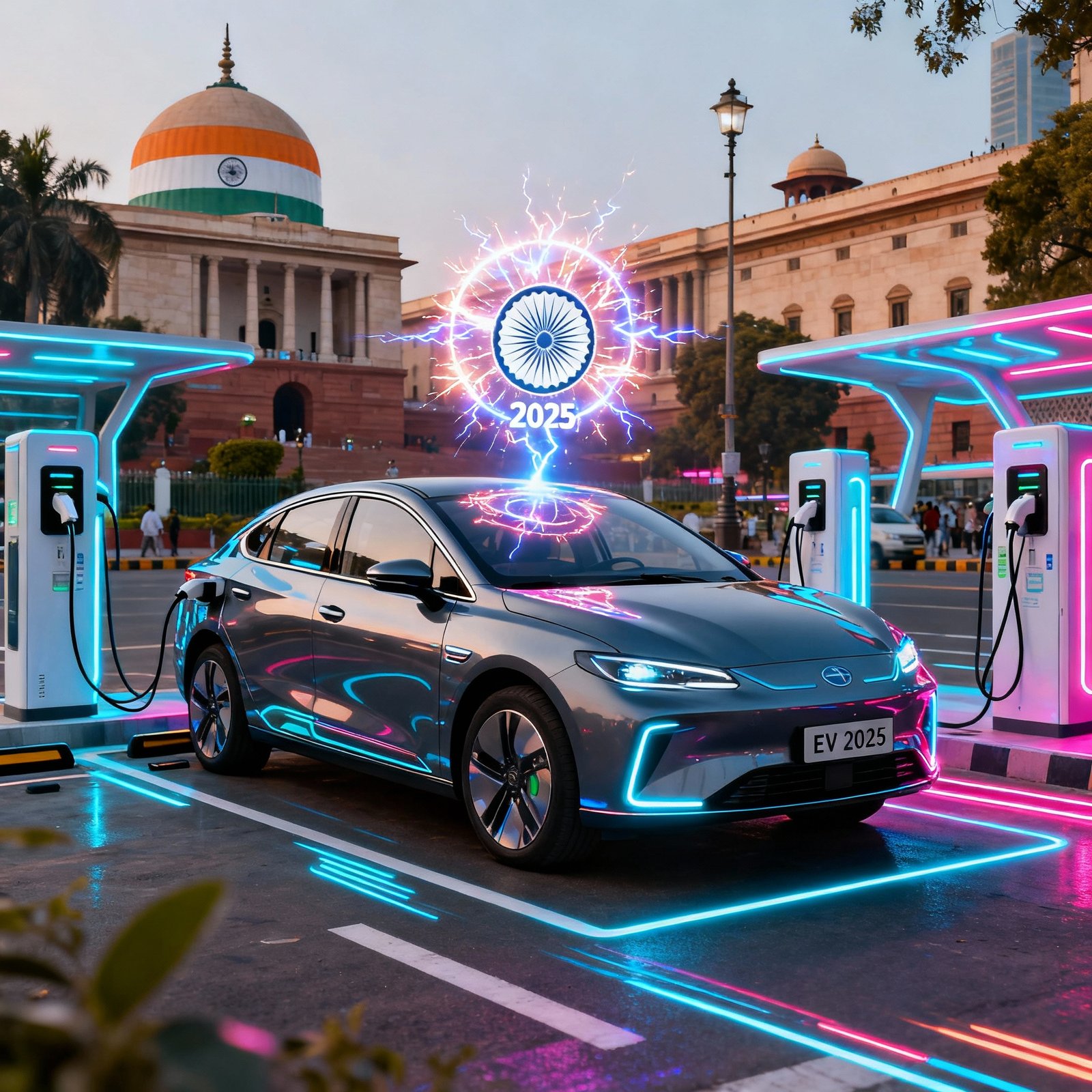
EV growth in 2025 is impossible to ignore. Surging oil prices, climate awareness, and the allure of zipping past petrol pumps have fired up the Indian auto market. In 2025, electric vehicle (EV) launches are set to dramatically outnumber traditional petrol and diesel cars, with 18 of 28 new vehicles being electric, according to industry reports. Brands like Tata Motors, Maruti Suzuki, and Hyundai are racing to meet this demand, rolling out new models with affordable pricing and increased range.ibef
Several factors fuel this revolution:
- Ambitious national targets: The government aims for 30% EV penetration by 2030.
- Rising consumer awareness of climate change and long-term savings.
- Cost advantages on road tax, registration, and maintenance.business.cornell
- An explosion in two-wheeler and three-wheeler EV sales, providing a cost-effective entry point for the masses.auto.economictimes.indiatimes+1
Policy Push: The Power Behind the Shift
The backbone of India’s EV leap is robust government support—think policy, not just publicity. Through the FAME II scheme (Faster Adoption and Manufacturing of Hybrid and Electric Vehicles), the government committed a massive ₹10,000 crore incentive pool for manufacturers and buyers, accelerating EV adoption in both cities and countryside.sirtbhopal+1
Key actions include:
- GST on EVs reduced to 5%—compared to 28% for ICE vehicles.
- State subsidies and road tax waivers in Delhi, Maharashtra, Tamil Nadu, and more.
- PLI (Production Linked Incentive) scheme for local EV and battery manufacturing to reduce imports.
- Massive investment in EV charging stations: Over 7,400 public fast-chargers and partnerships with private players for highway coverage.sirtbhopal
The Numbers: How Fast is the Market Moving?
India’s EV sector has moved from a trickle to a steady stream:
- EV passenger car sales nearly doubled to 13,178 units in June 2025 compared to a year earlier.auto.economictimes.indiatimes
- Three-wheelers make up over 60% of India’s EV market, powering last-mile connectivity and urban delivery networks.auto.economictimes.indiatimes
- Monthly electric vehicle sales crossed 180,000 units in June 2025, and annual EV sales are projected to touch 1 million units by 2030, with a market size leap from $54.4 billion (2025) to $110.7 billion (2029).business.cornell+1
Here’s a snapshot of recent growth:
| Month | EV Sales (2025) | YoY Change (%) |
|---|---|---|
| January | 1,924 | 41 |
| February | 9,491 | 26 |
| March | 13,314 | 36 |
| April | 13,384 | 72 |
| May | 13,268 | 66 |
| June | 13,975 | 92 |
| July | 16,097 | 101 |
| August | 17,298 | 155 |
| Total | 108,751 | 71 |
Storytelling: Real-World Impact
Take the example of Suresh, a small business owner in Pune. By swapping his petrol cargo three-wheeler for an electric one, he cut his monthly running costs by nearly half. Suresh isn’t alone: Delivery giants, grocery startups, and e-commerce platforms have rapidly electrified their fleets, translating to cleaner air and significant operational savings. These early adopters become EV evangelists, inspiring friends and neighbors to consider the switch themselves.
What’s Fueling the Electric Vehicle Revolution?
1. Affordable Entry Points: Two-wheelers are leading India’s electric adoption with over 50% share, catering to everyday commuters. Startups are rapidly innovating here.business.cornell+1
2. Government Incentives: State and central incentives bring down the cost gap between EVs and their petrol/diesel counterparts, making EVs more attainable.drishtiias+1
3. Charging Infrastructure Growth: The government’s strategic rollout of public fast chargers, combined with private charging networks in malls and offices, addresses charging anxiety, especially in urban hubs.drishtiias+1
4. Improved Range & Features: New models promise real-world ranges between 300 and 700 km, plus features once limited to luxury cars—think wireless charging, intuitive apps, and advanced safety tech.business.cornell
The Roadblocks: What’s Holding EVs Back?
Despite all the momentum, India’s EV highway has its speed bumps:
- High Upfront Costs: Even with subsidies, the sticker price of electric cars remains a hurdle for many middle-class buyers.eelet+1
- Charging Infrastructure Gaps: Rural and semi-urban India still faces a dearth of fast, reliable charging points.sciencedirect+1
- Range Anxiety: Fear of running out of charge mid-journey slows adoption, especially outside Tier 1 cities.sciencedirect
- Battery Supply Chain & Technology: Dependence on imported lithium-ion cells and the lack of standardized charging ports create uncertainty and confusion for buyers.garwarehitechfilms+1
- Resale Concerns: Short battery warranties and uncertain second-hand values deter cost-conscious buyers.sciencedirect
- Grid Readiness: Sudden EV adoption puts pressure on local electricity grids, demanding quicker upgrades and smart grid management.garwarehitechfilms
Busting the Myths: Answers to Common Questions & Objections
“Are EVs really cheaper overall?”
- Absolutely, when considering long-term fuel and maintenance. EV owners spend less on charging than on petrol/diesel, and fewer moving parts mean lower maintenance bills.eelet+1
“Do EVs have enough range for Indian cities?”
- Most new models offer 250–500 km real-world range, easily covering daily commutes with charging needed once or twice a week.sirtbhopal+1
“How fast and easy is charging?”
- Urban hubs and highways are seeing rapid rollout of both slow and fast-charging options. Home charging remains the most reliable for convenience.garwarehitechfilms+1
“Are there enough options for buyers?”
- With 18 electric models launching in 2025 alone, buyers have more choices across budgets and needs—from compact city cars to premium SUVs.ibef
Key Players and Upcoming Models
- Tata Motors: Market leader, launching the near-production Harrier EV and expanding to affordable models.
- Maruti Suzuki: Introducing the e Vitara, a flagship electric SUV with advanced features and multiple battery choices.
- Hyundai: Committing to local battery assembly and building over 600 fast-chargers by 2030 for its growing EV lineup.
- BYD, MG, Citroen, and others: Bringing in premium electric models to compete on range, tech, and safety.ibef
What Lies Ahead? Trends for 2025 and Beyond
- SUVs Lead the Demand: 61% of future electric car sales are expected to come from SUVs, thanks to Indian buyers’ love for larger vehicles and new spacious, tech-loaded models.ibef
- Doubling Down on Commercial EVs: Electric buses and delivery vehicles are rapidly electrifying the logistics and public transport sectors.
- Policy Targets Drive Competition: The government’s carrot-and-stick approach will push both Indian and global automakers to keep innovating on price and performance.lordsauto+1
- Battery Innovation and Recycling: As the supply chain matures, local battery production, recycling programs, and tech upgrades will improve affordability and environmental impact.drishtiias+1
Quick Takeaways for Potential Buyers
- Lower running and maintenance costs
- Tax, registration, and parking perks
- Expanding charging network
- More affordable two- and three-wheeler options
- Wide range of new models launching in 2025
EV Smart Shopper’s Checklist
- Compare total cost of ownership (not just purchase price)
- Check charger availability in your locality and along your routes
- Factor in government incentives before buying
- Look for battery warranty and resale programs
- Join EV owner communities for support and real-world tips
Conclusion: Is Now the Right Time to Go Electric?
India’s electric vehicle revolution is gathering speed, driven by smart policy, market innovation, and a new generation of buyers who care about cost and conscience. While challenges remain, 2025 marks a tipping point where EVs are not just the future—they’re the new now. Whether you’re a fleet owner looking to cut costs, a commuter seeking cleaner air, or a family hoping for lower bills, there’s likely an EV for you rolling out this year.
Ready to make the switch? Learn more, compare top EVs, or get a customized quote from leading dealers today—don’t wait for the traffic to leave you behind. The future is electric, and it’s lighting up the streets of India.