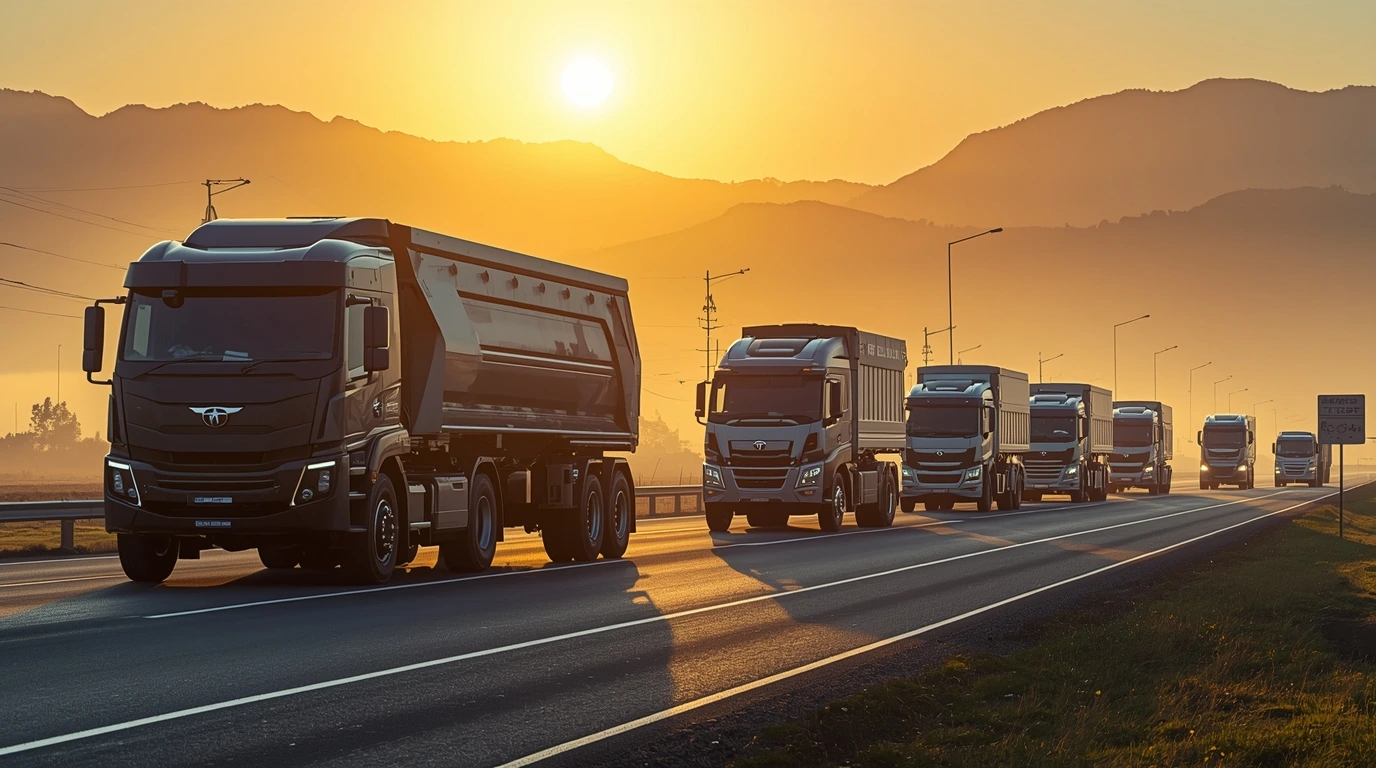
Discover the Top 5 Upcoming Tata Commercial Vehicles in 2026 — Prima EV, Signa 4840, Ultra E Series, LPT 812 & Smart Cabin Trucks. Learn how these next-gen vehicles will revolutionize Indian trucking with efficiency, power & profit.
It was 5:30 AM somewhere near Nashik.
The sky still had that faint blue tint that comes before sunrise. Rows of trucks lined up at a roadside dhaba — some humming softly, others groaning from their night hauls.
Rajesh, a 38-year-old fleet owner, sipped his first cutting chai of the day.
He looked at his Tata 407 — the same truck his father bought 15 years ago. Its paint had faded, its cabin worn, yet it had carried thousands of tonnes of freight across India.
But this morning was different. Rajesh wasn’t just thinking about his next load — he was thinking about the future of trucking. Fuel prices had risen again, emission rules were tightening, and customers now wanted faster, cleaner, more reliable deliveries.
“I wish there was a truck that understood today’s business,” he muttered, watching a newer Tata Signa roar past.
That’s when his story — and India’s trucking story — began to change.
2. The Backbone of India on Wheels
Every single road, every single bridge, every single brick that builds India owes its journey to a truck. Trucks are not just machines — they’re the veins through which India’s economy flows.
But behind every truck is a heartbeat — a driver’s heartbeat, a family waiting at home, a business relying on delivery. And behind all of them, there’s one name that has stood the test of time: Tata Motors.
From the legendary Tata 407 to the powerful Tata Prima, Tata Motors has carried India through decades of progress. But as 2026 approaches, something extraordinary is brewing.
3. The Silent Shift: Why 2026 Matters More Than Ever
2026 isn’t just another year in the auto calendar — it’s the year India’s commercial-vehicle industry transforms forever.
Three waves are colliding:
- Technology: The rise of electric and connected vehicles.
- Regulation: Bharat Stage VII norms and sustainability mandates.
- Economics: The surge in logistics, infrastructure and e-commerce.
And Tata Motors is right at the center of this storm — building trucks that aren’t just built to carry loads, but to carry India’s ambition.
4. The Call of Innovation: Tata’s Vision for the New Decade
When Tata engineers sit down to design a truck, they don’t just think in horsepower or torque.
They think about people.
They think about drivers spending nights away from home.
They think about small fleet owners counting every rupee of diesel.
They think about the air we breathe, the roads we share, and the promise of a greener India.
That’s why Tata’s next-generation commercial-vehicle strategy for 2026 is built on four powerful pillars:
- Efficiency – Higher payloads, lower fuel consumption, intelligent drivetrains.
- Sustainability – Electric, CNG, LNG, and hydrogen-ready models.
- Connectivity – Smart telematics, predictive maintenance, driver-assist.
- Comfort & Safety – Air-conditioned cabins, better suspension, fatigue-free ergonomics.
5. The Real-World Pain: What Truckers Face Every Day
Let’s pause and be honest.
If you’ve ever run a transport business, you know the grind.
- Diesel prices keep eating margins.
- Drivers are hard to find and harder to retain.
- Older trucks spend more time in the workshop than on the road.
- Regulations get tougher every year.
Rajesh, our friend from Nashik, faces all of these. His father’s diesel truck runs barely 5 km per litre. Breakdowns cost him contracts. Drivers complain about the heat inside the cabin and the endless gear shifts.
He often dreams: “What if trucks could think? What if they could tell me when they need service before they break down?”
That’s not a dream anymore.
6. The New Breed of Smart Trucks
Fast-forward to Tata’s R&D facility in Pune — a space buzzing with prototypes, screens and engineers.
Here, the trucks of tomorrow are already alive. These machines are not just built with metal and bolts; they’re built with intelligence.
The 2026 Tata lineup is expected to include:
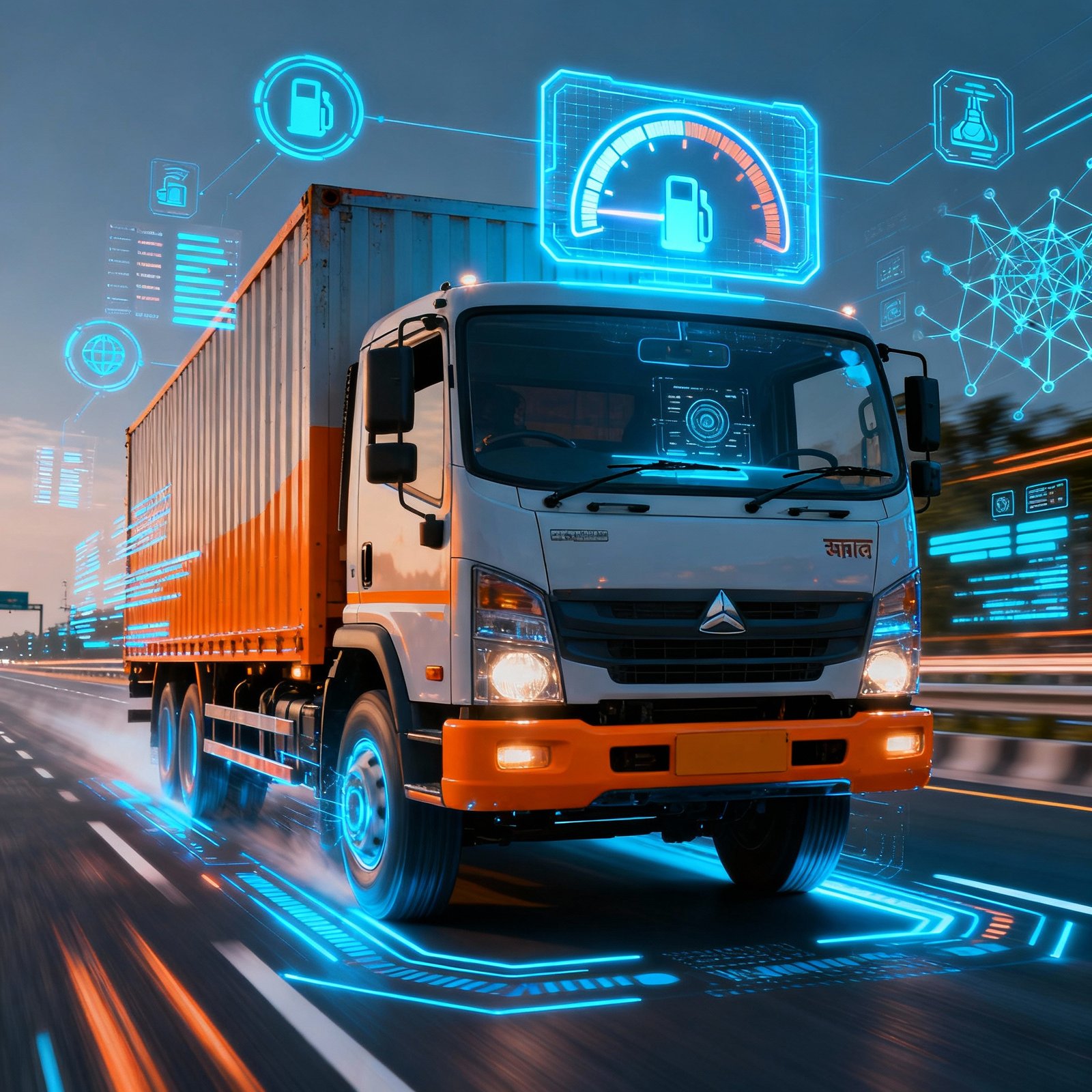
- AI-driven telematics that monitor fuel, speed and driver behavior.
- Predictive maintenance systems that warn before a part fails.
- Fleet-tracking dashboards that give owners real-time visibility.
- Ergonomic driver cabins with climate control and touch-screens.
Imagine Rajesh getting a notification on his phone:
“Your Signa 4840 is due for brake pad replacement in 200 km.”
No more breakdowns in the middle of the highway. No more guessing. That’s the Tata difference.
7. From Diesel to Dreams: The Rise of Electric Commercial Vehicles
If there’s one phrase that will define the next decade, it’s this: “electric mobility.”
When Tata Motors introduced the Tata Prima E.55S EV, it wasn’t just launching a truck — it was rewriting history.
A fully-electric long-haul truck capable of massive payloads and whisper-quiet operation. No exhaust fumes. No rumbling engine noise. Just pure torque and performance.
For fleet owners, the math is simple:
- No diesel bills.
- Lower maintenance.
- Tax incentives for green vehicles.
- Longer vehicle lifespan.
Rajesh’s son, Rohan, who helps manage their small logistics firm, said it best:
“Dad, this isn’t just a truck — it’s a business investment that saves money every kilometre.”
That’s how generational change begins — not with talk, but with better machines.
8. A Glimpse into 2026: What’s Coming Next
According to Tata’s upcoming release roadmap and multiple industry trackers, 2026 will witness a wave of revolutionary commercial vehicles:
- Tata Prima EV (Next-Gen) for long-haul logistics.
- Tata Signa 4840 Next-Gen for heavy-duty mining and construction.
- Tata Ultra E-Series for city-to-city electric cargo transport.
- Tata LPT 812 (2025–26) for urban distribution.
- Tata Smart Cabin LPT Series with auto-transmission for comfort and efficiency.
Each model targets a specific segment — from metro deliveries to cross-country hauls — and each one carries Tata’s signature blend of reliability, performance, and trust.
9. The Emotional Side of Innovation
Every time a new Tata truck hits the road, somewhere a dream gets lighter.
A driver who once drove 16 hours straight now drives with an air-conditioned cabin.
A small fleet owner sees profits rise because of fuel efficiency.
A father sleeps better knowing his drivers are safe.
When Tata builds trucks, it doesn’t just build machines — it builds trust stories.
Stories of hope, resilience, and progress.
As Rajesh once said, “My Tata 407 carried my father’s dreams. Now, my new Tata Prima will carry my son’s future.”
That’s not marketing. That’s legacy.
10. The Road Ahead — A Revolution in Motion
By 2026, India’s trucking landscape will look completely different:
- Electric highways with fast-charging depots.
- Autonomous-ready trucks equipped with driver-assist sensors.
- Connected fleets managed from mobile apps.
- Green logistics zones that only allow zero-emission vehicles.
Tata Motors is investing heavily in each of these areas, positioning itself as the leader of India’s commercial-vehicle revolution.
So, when you next see a Tata truck glide silently on the highway, remember — you’re not just watching a vehicle. You’re witnessing a story of innovation, courage, and Indian excellence on wheels.
11. The Dawn of a New Fleet – Rajesh’s Leap of Faith
It had been six months since Rajesh decided to expand his small logistics business. The decision wasn’t easy—rising diesel costs, unpredictable delivery schedules, and driver complaints made every day a balancing act.
But one afternoon, while scrolling through an article about Tata Motors’ upcoming 2026 fleet, something clicked. “Maybe this is the change I’ve been waiting for,” he whispered.
He wasn’t wrong.
2026 would mark the beginning of a golden era for Indian trucking — and Tata Motors was already gearing up with five masterpieces that blend technology, power, and purpose.
12. Tata Prima EV: The King of Silent Power
Rajesh stood at Tata’s Pune test track as a gleaming silver beast rolled forward — the Tata Prima E.55S EV, the first electric long-haul truck built for Indian highways.
The moment its motor hummed to life, he couldn’t hear the usual diesel rumble. It was quiet, clean, futuristic.
What Makes the Prima EV Special
- Range & Power: Expected range of 400–500 km per charge with regenerative braking.
- Charging Efficiency: 350 kW DC fast-charging capable—80 % in under an hour.
- Payload Capacity: Similar to its diesel counterpart (40–55 tonne range).
- Connectivity: Real-time telematics, GPS analytics, and predictive maintenance alerts.
- Cabin Comfort: Fully AC cabin, touchscreen dashboard, and ergonomic driver seats.
Why Fleet Owners Love It
- Fuel savings up to 60 %.
- Government EV subsidies and potential toll exemptions.
- No emission penalties under upcoming Bharat VII norms.
- High brand value—“green logistics” contracts prefer EV fleets.
Rajesh imagined his company name—Sain Logistics—on that silver truck. “It doesn’t just move cargo,” he thought. “It moves the nation forward.”
13. Tata Signa 4840 T Next-Gen: The Iron Giant of Heavy Haulage
Mining companies in Chhattisgarh. Construction projects in Himachal. Highway contractors in Rajasthan. They all have one thing in common — they need a truck that never stops.
That’s where the upcoming Tata Signa 4840 T Next-Gen steps in — a beast forged for endurance.
Features that Redefine Heavy Duty
- Engine: 400 hp Cummins X Series BSVII-ready diesel engine.
- Transmission: 12-speed automated manual gearbox for smoother shifting.
- Suspension: Heavy-duty bogie with air-suspension for stability under rough loads.
- Cabin: Driver-centric cockpit with AC, digital cluster, and fatigue monitor.
- Safety: Hill-hold assist, lane-departure alert, and ABS + EBS.
Why It’s a Game-Changer
- Handles 40 + tonnes of payload effortlessly.
- 15 % more torque and 8 % better fuel efficiency than the current model.
- Designed for long-hour operations in extreme terrain.
- AI-based maintenance diagnostics for minimal downtime.
Rajesh visited a quarry where a test unit was hauling ore. After one full day’s cycle, the driver grinned, “Sir, this one doesn’t feel like work — it feels like flying on wheels.”
That’s the emotional difference Tata brings — not just horsepower, but heart-power.
14. Tata LPT 812: The Everyday Hero of Urban India
In every Indian city, from Jaipur to Guwahati, you’ll see compact Tata LPTs weaving through narrow lanes, carrying the economy on their backs.
Now, with the Tata LPT 812 (2025–26), Tata Motors has rewritten what an urban logistics truck can be.
Key Highlights
- Payload: 5-tonne capacity with superior stability on 4 tyres.
- Engine: 125 hp 3.3-litre diesel delivering strong city torque (360 Nm).
- Cabin: Factory-fitted AC, noise-insulated cabin, USB ports, and bottle holders.
- Safety: Reinforced chassis, advanced braking, and tilt-steering for driver comfort.
Why Small Businesses Love It
- Ideal for e-commerce, FMCG, retail and delivery services.
- Low operating cost — optimized for stop-start city driving.
- Higher driver satisfaction — AC and ergonomic seating reduce fatigue.
- Easy maintenance — widely available parts and nationwide service.
Rajesh leased one for his intra-city deliveries. After a week, his driver Ravi said, “Sir, this truck drives like a car!”
That’s how Tata is turning hard work into comfort — and comfort into productivity.
15. Tata Ultra E Series: The Electric Workhorse for the New India
The Ultra E Series is what experts call the “perfect balance of practicality and power.”
Think of it as the middle child between urban and long-haul — perfect for intercity deliveries, cold-chain logistics, and e-commerce freight.
Expected Specifications
- Range: Up to 250 km on a single charge.
- Battery: LFP pack with 120 kWh capacity.
- Charging: 80 % charge in 90 minutes.
- Payload: 8–10 tonnes.
- Body types: Reefer, cargo, flatbed.
Advantages for Businesses
- Zero emissions — perfect for NCR & clean-air zones.
- Low maintenance — no engine oil or gearbox issues.
- Tax benefits under FAME and state EV policies.
- Silent operation for night deliveries in cities.
Rajesh’s friend Suman runs a small e-commerce delivery firm between Gurugram and Jaipur. When he switched two diesel trucks for Ultra E models, his monthly fuel cost dropped by ₹ 65,000.
He laughs, “Now every km earns me more!”
That’s not marketing — that’s math powered by progress.
16. Tata LPT Smart Cabin Series (2026): When Technology Meets Comfort
Drivers are the heartbeat of trucking — yet for decades, cabins were designed only for machinery, not humans.
The upcoming LPT Smart Cabin Series changes that forever.
Next-Gen Driver Experience
- Auto-Transmission (AMT) — no clutch fatigue on long routes.
- Digital dashboard with navigation, diagnostics, and telematics.
- Noise reduction technology and adjustable air-suspension seats.
- Air-conditioned sleeper berth for long-haul comfort.
- Integrated Fleet Management System for owners.
Why It Matters
- Driver shortage solution: Better comfort = better retention.
- Reduced accidents: Driver fatigue drops by 40 %.
- Increased uptime: Predictive alerts for engine and brake health.
- Higher ROI: Happier drivers = more deliveries, less downtime.
When Rajesh’s best driver, Bhaskar, tested the LPT Smart Cabin prototype, he smiled after his first 500 km drive:
“Sir, it’s like driving an office on wheels.”
And that’s exactly what the future of trucking is meant to feel like.
17. How These Trucks Will Redefine Trucking in 2026
Let’s look beyond the specs and see the bigger picture.
Here’s how Tata’s 2026 line-up is shaping the next era of transport.
A. Economic Impact
- Fuel efficiency & EV integration cut running costs by 30–60 %.
- Higher payload capacity reduces cost per tonne km.
- Digital maintenance means less downtime and more profit.
B. Environmental Shift
- EV and CNG options reduce CO₂ emissions drastically.
- Tata’s commitment to net-zero by 2045 aligns with global sustainability standards.
- Green logistics will attract eco-conscious clients and government contracts.
C. Human Transformation
- Driver welfare becomes a priority.
- Better health, safety and comfort lead to longer careers and stronger families.
- Trucking as a career choice regains dignity and pride.
D. Digital Evolution
- Connected fleets enable AI-driven decision making.
- Mobile apps let owners track every truck in real-time.
- Predictive analytics minimizes costly breakdowns.
This isn’t just evolution — it’s a complete re-wiring of India’s logistics DNA.
18. Real-World Voices: What Fleet Owners Say
Tata’s customers don’t speak in corporate language — they speak from experience.
- “My Signa truck has run 1.2 lakh km in 8 months without a single major issue.” — Ravindra Patil, construction contractor, Nagpur.
- “The new LPT 812 reduced our city delivery times by 20 %.” — Zahid Ahmed, FMCG distributor, Lucknow.
- “The EV Prima saved ₹ 1.5 lakh in diesel within the first quarter.” — Suman Mehta, GreenMove Logistics, Delhi.
These are not isolated stories; they’re the sound of progress rolling on India’s roads.
19. The Emotional Heartbeat of Every Tata Truck
Ask any driver in India about their first truck, and chances are they’ll say “Tata.”
There’s something special about that badge — it stands for trust, reliability, and Indian pride.
For Rajesh, his Tata 407 was more than a vehicle. It was the start of his family’s dream.
For his son Rohan, the new Prima EV represents a different dream — a modern, profitable, eco-friendly business.
And for the millions of drivers who sleep in their cabins, eat on the road, and carry India’s progress on their shoulders, Tata’s 2026 fleet isn’t just machinery — it’s a promise that their journey matters.
20. The Future Is Now: Your Next Move
If you’re a fleet owner, a transport entrepreneur, or someone who’s been waiting for the right time to upgrade — that time is now.
Here’s what you can do today:
- Evaluate your current fleet’s fuel and maintenance costs.
- Estimate how much an EV or new diesel variant could save.
- Talk to your nearest Tata Commercial Vehicles dealer about 2026 launch timelines.
- Ask about early booking benefits, fleet discounts, and AMC plans.
- Prepare your drivers with training for new tech and automation.
Don’t just wait for the future — drive into it.
21. The Road Home: Rajesh’s Full Circle
A year later, Rajesh stood outside his small warehouse watching two new Tata Prima EVs roll out at dawn. Their headlights cut through the fog, bright as hope.
His father had once driven the old 407 down the same road.
Now his son was tracking those new EVs from an app on his phone.
Three generations, one name — Tata.
Three eras, one goal — keep India moving.
As the engines hummed quietly into the morning, Rajesh smiled.
“The future of trucking is here, and it has Tata written all over it.”
22. Conclusion – The Legacy of Trust Meets the Future of Technology
From the humble Tata 407 to the cutting-edge Prima EV, Tata Motors has done what few brands can — stay relevant, reliable, and revolutionary at the same time.
Its 2026 line-up isn’t just about new models; it’s about an entire ecosystem of better logistics, lower costs, and a cleaner future.
Whether you run five trucks or fifty, this is your chance to join the movement toward a smarter India.
Because trucking isn’t just business — it’s the heartbeat of our nation.
And in 2026, that heartbeat will beat louder, cleaner, and smarter — thanks to Tata Motors.